Monday, July 8, 2013

Restorative Transformation at The Gardens

The Botanic Gardens at Kona Kai Resort makes a wonderful vacation destination for many reasons, one of which is the restorative effect it has on so many of our guests. It seems to me this is one of the major reasons people choose to stay here at Kona Kai and return year after year.

It seems to me that the best spot for a given vacationer is one that best matches their vacation goals. If someone is looking for nightlife, shopping, and a profusion of attractions within walking distance, a stay in Key West is probably well-suited for them. Others, however, are looking for a place apart, a sanctuary of sorts, where they can rest and restore their vitality. It is with the latter vacationer in mind that The Botanic Gardens at Kona Kai Resort has been carefully designed. In general terms, a "sanctuary" should be a place where one feels safe and secure, a place as free as possible from the pressures and distractions of the "outside world." At the same time, one should not get the feeling of being trapped. You may not notice it, but the palm tree framed bridge was designed to emphasize the transition from the outside world to our hidden botanical sanctuary:


Plants provide many valuable goods and services to humans, including medicine, food, fragrance, materials, energy, and oxygen. While all of these things are certainly incredibly important to our survival and well-being, one of the least tangible but most important services plants can provide for us is what I like to call "restoration."

The well-known ecologist E. O. Wilson coined the term "biophilia" to represent the apparent attraction of humans to natural hues, especially greens and blues, as opposed to the grays of concrete and artificial colors of manufactured materials - we instinctively seek out verdant landscapes and panoramic azure vistas when stress levels rise. Indeed, scientific studies have shown that access to well-designed outdoor spaces improves well-being.

Yep, I'd say it's more than an apparent attraction...and not too much research needed to prove it improves well-being!

I know from personal experience that a walk through my college arboretum in the afternoon after classes was the perfect medicine to restore, re-energize, and refocus me before a full night of homework. Now that I have a full-time job, if ever I hit a creative wall or cannot figure the answer to a problem that has presented itself, I find that a walk outside "clears my head" and helps immensely when I return to working. I also know that commuting via paddle board puts me in a much different frame of mind to start my workday than if I had just had a traffic-laden commute. And whenever I have the opportunity to take a vacation, my ideal place is a peaceful sanctuary in nature. There, my troubles and burdens most easily fall away. My vitality is replenished, and I feel ready to once again take on the responsibilities and challenges awaiting my return home.

This is exactly what The Botanic Gardens at Kona Kai Resort, and a restorative garden in general, is designed for - reducing stress, anxiety, mental fatigue, emotional fatigue, anger, and pain, and fostering relaxation, replenishment, soothing, calming, and rejuvenation, thereby restoring the visitor to an optimum state of being. The Gardens provides an escape that encourages the restoration of balance in mind, body, and spirit; it is a sanctuary of renewal, a synthesis of disparate elements that becomes a life-giving energy barely perceptible at the level of consciousness. The body has a great capacity to heal itself, which seems to be enhanced for many people when they are immersed in a restorative garden, such as the one we have here at Kona Kai.


The rest of this post explores in detail what researchers have determined are crucial elements specific to restorative gardens and the ways The Botanic Gardens at Kona Kai Resort incorporates those elements.

In terms of general garden design, a multilayered landscape (one with large trees, smaller trees and shrubs, and understory plants), lushly lined pathways and vistas, water, and the right balance of flowering and foliage plants are the best ingredients. When spending time in such a place, one begins to feel the restorative effects of the environment even though one may not be able to pinpoint the specific reasons why. Researchers believe that gardens with about 70% plants and 30% pathways / gathering areas are optimal for restoration.

All of the above, including a perfect 70% / 30% balance!

Researchers have found the gardens that heal and soothe best are those providing gentle stimulation of all the senses. Vision is the dominant sense for most people - colors, views, visible textures (we have lush tropical foliage, flowers, coral stone, wood, and tiki huts), and activity (watching birds, squirrels, lizards, and boats here) - but if you are in a relaxed state, you begin to take note of more than just what is apparent to sight. Sound is next - we have a variety of birds throughout the gardens, bamboo and palm fronds rustling in the breeze, small waterfalls, and waves. Right now we have a mockingbird that sits atop one of our trees and sings beautifully most every day; cardinals and red-bellied woodpeckers also join in the chorus. Fragrances form strong attachments to memories, and when certain fragrances are present, there is a significant impact on the mind. Fragrances here are those of a tropical paradise - salt water breezes; frangipani, orchid, and jasmine flowers; and Key lime soaps in the rooms). Taste - samples from our tropical fruit garden are available when ripe (fresh pineapple, Jamaican cherries, sugar apples, papaya, starfruit, figs, pomelo, and bananas). Touch - many of our plants have interesting textures (gumbo-limbo, sensitive plant, palm fronds). Here are a few photos of the examples above here at Kona Kai:

White frangipani - fragrant and beautiful.

Our resident red-bellied woodpeckers.

Delicious fruit from our starfruit tree.

Some guests benefit more when they can be involved in some way with the restorative environment, while others prefer more passive relaxation - our gardens offer the opportunity for both. Guests looking for more stimulation can explore the Gardens on their own to experience the sensory stimulations described above and take a tour with me to learn and experience much more when it comes to the plants. Self-tours are also available for those who prefer to explore on their own.

A restorative garden should provide opportunities for discovery and give the place a sense of hiddenness and mystery, but not so much that guests are brought to the point of confusion and disorientation. Our gardens do this through a network of pathways that are easy to navigate but not so simplistic that they are rigid and boring. I'll take guests on a tour who have stayed with us multiple times and they'll discover plants and areas they never saw before. Here is a common "path less traveled:"

A little exploration...

...often leads to hidden treasures.
Kayaks and a paddle boat allow for the adventure and exploration to continue, as our gardens transition seamlessly to Florida Bay, with its life-filled seagrass meadows and mangrove islands. After exploring, there's nothing like paddling back to our paradisiacal "Garden of Eden."

Florida bay beckons with its stunning waters and mangrove islands.

One of the best parts of going out into the Bay is coming back!

Hammocks and lounge chairs provide spaces to relax in the gardens, taking the place of more traditional garden benches and chairs, though we do have a few of those, too. Movable lounges and chairs allow for more informality to contrast the often rigid constraints that cause stress and anxiety in the "outside world." There are a number of places within the gardens where one can be alone, or at least removed from, other guests, as well as a number of places where one can gather with others to interact. Spaces in both shade and sun are crucial to have available to guests, depending upon their disposition. My personal favorite spot to be is under the dappled shade of palm fronds:


Opportunities and settings for reflection are a must in restorative gardens. I find the best place for this is looking out over the water, with each time of day conducive to different moods, perspectives, and insights. Also, being able to be in the gardens at night and look up at the stars is incredible - laying in the hammock looking up at the stars through the gently swaying palm fronds is one of my favorite reflection environments. Opportunities for this kind of reflection are limited at most botanic gardens, as they will often close at sundown.

One of my favorite times of day for reflection, which continues on into the night...

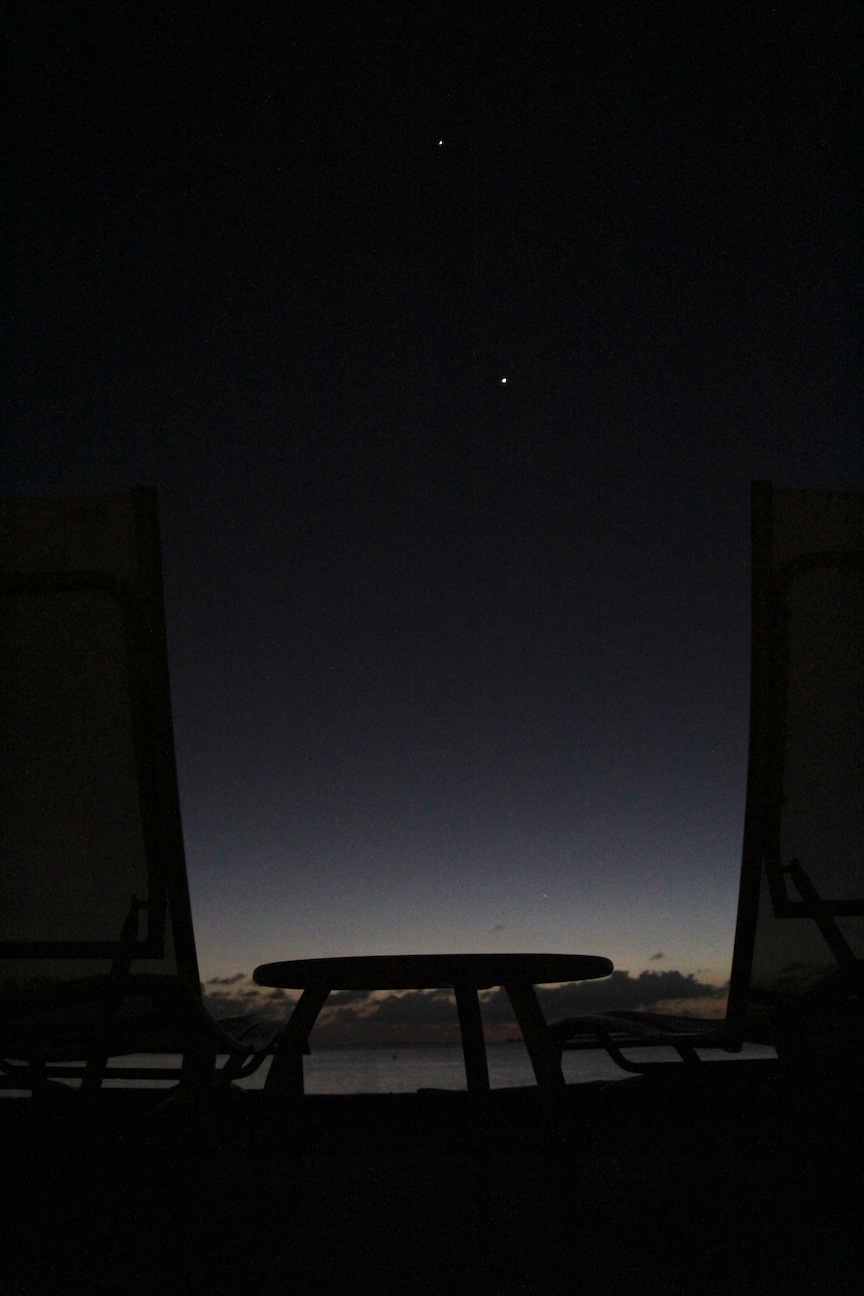
...as the stars begin to come out after sunset.

For me, as well as countless other guests I see on a daily basis, restoration happens easily here at The Botanic Gardens at Kona Kai Resort. From the early morning until late evening, opportunities for restoration abound. Even just looking at photos is enough to have an effect, but I assure you - this is something you need to experience in person!


Rick Hederstrom
Associate Director

Thursday, June 20, 2013

A New Way To Look At Life And The Future Of Our World

Although I am usually the one posting blogs for the Gardens, Joe, the Gardens' Executive Director, recently posted a blog on Kona Kai's website that I thought would be worthwhile re-posting here...enjoy!

GIVE US 90 MINUTES AND WE'LL GIVE YOU A NEW WAY TO LOOK AT LIFE AND THE FUTURE OF OUR WORLD...


That's our goal at The Botanic Gardens at Kona Kai Resort. It's a lofty goal that we are succeeding at, but without your help we can't do it forever.

Initially started in 1994 as a landscaping project for our evolving Florida Keys resort, in 2008 Grounds Director Veronika Milar and General Manager Tracey Weaver advocated a garden expansion to provide additional pleasure for our resort guests.

Kona Kai in the mid-'90s - quite a difference!
It was then that owners Joe and Veronica Harris first realized the uniqueness and importance of many of the plants on our grounds. Following extensive Internet research, Joe and Ronnie again expanded the range of plant species, with the intention of advocating the important role plants play in our everyday lives. Their vision has led to what we offer today: The Botanic Gardens at Kona Kai Resort, an integral - but separate - part of the Kona Kai experience, open to the public since March 2011.

Our first batch of educational display labels in early 2011!
Today, funded by resort profits, The Botanic Gardens at Kona Kai Resort is a separate, educational 501(c)(3) nonprofit. We fulfill our educational mission through the ethnobotanical tour we offer our guests, Florida Keys residents and visitors, by our satellite partnership with The Fairchild Challenge educational program for school students, and with our evolving educational ethnobotanic website, kkbg.org.

Sharing the importance of coconut palms with students.
Our visitors and school students greatly appreciate the foundation we provide towards their appreciating the enduring value and ecological importance of plants. Rick, our ethnobotanist (we believe we're one of the only hotels/resorts in the world with a staff ethnobotanist), writes a blog where you can learn more about our efforts. Here are some links to our educational success stories:

KKBG - Fairchild Challenge Awards Ceremony 2013

KKBG - 2012-2013 Satellite Partnership with The Fairchild Challenge

Olympic Wreath Competition 2012

First year of our ethnobotanic tour...

You can, of course, explore all of Rick's blogs, as well as much of our Gardens by going to kkbg.org on your computer - be it desktop, laptop, tablet, or smartphone. We're currently working on an extensive expansion of our ethnobotanic plant "stories," so everyone who hears about our Gardens can visit us here in Key Largo from anywhere in the world. We're doing this to demonstrate just how significant plants are to our lives, our continued survival and our successful evolution as a species. Doing what many thought was a bit outlandish, Joe and the Kona Kai team have achieved the dual purpose of giving people a place to relax while seeding an understanding that the more we learn about - and from - plants, the better our world will become.

Preparing a sample of Key lime for tour-takers.
We tell you all this because, as mentioned above, our Gardens are funded by resort profits, which go only so far. We need your donations and your endowments if we are to continue to grow our mission and our Gardens. Remember, from little acorns do great things grow: we'd like The Botanic Gardens at Kona Kai Resort to be here long after Kona Kai Resort is gone. Our profits alone cannot make that happen.  Click here to support us!


Joe Harris
Executive Director

Thursday, May 23, 2013

Our Awards Ceremony For The 2012 - 2013 Florida Keys Fairchild Challenge

Wow! What an end to The Botanic Gardens at Kona Kai Resort's inaugural year as a Satellite Partner of The Fairchild Challenge! We were hoping to get a good turnout of enthusiastic students, parents and teachers at the end-of-year awards ceremony, and we certainly did - the Murray Nelson Center was packed:

The Murray E. Nelson Government and Cultural Center - a great venue here in Key Largo for our ceremony.

Our first awards went out to elementary school students. One of this year's Challenges was to make masks of endangered animal species out of plants and recycled materials. Students showed off their winning masks on stage for everyone to see:

I especially like the student in the roseate spoonbill mask on the far left.

Here is a close-up of our first place mask winners from each grade level division:

On the left is Angeline de Paula's Aruba burrowing owl (Pre-K - 1st), on the right is Alex Sebben's American bald eagle (2nd - 3rd), and in the center is Hunter Slate's leatherback turtle (4th - 5th).

Elementary school students were also recognized for the drawings they did for the "Plants In Peril" Challenge. Mia O'Steen is the artist behind the first place entry entitled "seashore ageratum:"


Jack Tripp, winner of the 2nd-3rd grade division of the endangered species poetry Challenge, treated the audience to a stellar performance of "The Sea Turtle Rock," his original melodic poem about protecting the sea turtle:

One brave dude!

The Challenge with the most participation was the School Garden Challenge. I know these kids had a blast working on the gardens at their schools - they were so proud giving us tours of them when we visited the schools to see them ourselves.

School garden Challenge winners.

On to the middle school...  Students painted banners of nature in their neighborhoods:

The slogan on the banner on the right reads: "Don't Be Mean, Keep It Clean! Keep The Keys Beautiful For Everyone!"
The slogan on the banner in the center reads: "Be A Tree Hugger, Not A Tree Cutter!"
And the banner on the left...
...is shown below and was the first place banner, done by students at Treasure Village Montessori. As an FYI to those who don't know Key Largo, the human-like figure on the bottom-right is not someone drowning and/or trying to catch jellyfish, but rather the "Christ of the Abyss Statue," one of Key Largo's most popular dive destinations.

"A World Underneath The Waves - The Florida Keys"

Hallie Rutten reads a selection from her first place Historic Florida Challenge journals, which tell the story of a girl who lives in Key West but sails away one day to make a new life for herself on an abandoned outlying island:


After the students received their awards, teachers and administrators came to the stage to accept awards for the overall Challenge competition, which is based on point totals. Each Challenge is worth a certain number of points, so totals are determined by which Challenges are completed and judges' evaluations of submissions for these Challenges. The first place elementary and middle schools each received $500 to use towards environmental programs, while the second place schools received $250. These financial awards were made possible through the support of generous local community members. Below is a photo of teachers from the four winning schools:

Elementary School - 1st Place: Plantation Key School, 2nd Place: Ocean Studies Charter School
Middle School - 1st Place: Treasure Village Montessori, 2nd Place: Key Largo School

Finally, the overall winning school was recognized. This school scored the most points out of all elementary and middle schools involved and won, in addition to the recognition, the opportunity to work with world-renowned artist Xavier Cortada to bring one of his Participatory Eco-Art projects to the Keys!

And the winner is... the elementary school at Plantation Key School!

I think everyone here at The Botanic Gardens at Kona Kai Resort would say this first year of bringing The Fairchild Challenge to the Florida Keys has surpassed all our expectations. We certainly couldn't have done it without the hard work and support of our local teachers, students, school administrators, and community members. The awards ceremony definitely ended the year with a bang and we're looking forward to the 2013 - 2014 school year!


Rick Hederstrom
Associate Director

Saturday, May 4, 2013

The Fairchild Challenge 2012 - 2013

This past August, we began our inaugural year as a Satellite Partner of The Fairchild Challenge, and as we approach the end of the school year, I thought it would be fun to reflect and catch you up on all that we here at the Gardens have been up to in this area. The Fairchild Challenge is based at Fairchild Tropical Botanic Garden and was created to "foster interest in the environment by encouraging students to: appreciate the beauty and value of nature, develop critical thinking skills, understand the need for biodiversity and conservation, tap community resources, become actively engaged citizens, and recognize that individuals make the difference." This mission fits in well with our own and the program makes it possible for us to add an educational component for local schools, so we can educate students about the importance of plants and the greater natural environment to people.


If you recall, we had tested the waters of such a partnership the previous year when we facilitated a single Challenge (the Olympic Wreath Competition), at a single school (Key Largo School), with only a few teachers (Ms. Bobbi Burson, Ms. Sandra Prew, and Ms. Elena Delgado). For a refresher on this, you can search "olympic wreath" in the box above to see all the posts related to this competition. Everyone involved considered this to be a great success, and so we decided to commit to becoming a Satellite Partner of The Fairchild Challenge for the 2012 - 2013 school year.

Facebook announcement regarding the Olympic Wreath Competition Global Top 10 submission from Key Largo

We contacted local elementary and middle schools in the area to see how many teachers would be interested in participating in the program, and we had a wonderful response. Five out of the six schools in the Upper Florida Keys plus one homeschool family decided to participate, for a total of about 27 teachers and over 400 students participating. Fairchild offers five Challenges for elementary schools and ten Challenges for middle schools. We were considering starting off easy and only offering a few Challenges for teachers to choose from but ended up deciding we'd go all in and offer up every Challenge.  I'm glad that we did because although it was more work, it gave teachers more options to do Challenges that fit with their curricula.

Teacher Information Meeting held at The Botanic Gardens at Kona Kai Resort to kick off the school year.

As the school year got underway, I provided both in-person and e-mail support for teachers to address any questions they had about the Challenges and gave presentations in classes regarding certain Challenge topics that overlapped with my area of expertise (ethnobotany). I also worked with Ronnie (our Director of Education) to coordinate judging sessions for Challenge submissions and champion the program in the local community.

Local historian Jerry Wilkinson and I spoke to students about history and ethnobotany in Ms. Nicky Laak's class at Treasure Village Montessori.
One of the many judging sessions taking place at The Botanic Gardens at Kona Kai Resort

As Challenge submissions began coming in as deadlines approached, we, along with the judges, were consistently amazed at the quality and creativity of the work done by our local students. Submissions included endangered species animal masks and t-shirt designs, banners of nature in students' neighborhoods, journal entries of life in southern Florida during the 1800s, interviews of elders regarding their traditional use of plants in the past, school gardens, and environmental action projects such as developing and implementing a school-wide recycling program. Here are some photos of both in-progress and completed Challenge submissions:

Endangered species animal masks in Ms. Jan Mulvihill's class at Key Largo School

Endangered species animal masks in Ms. Diana McGuirk's class at Treasure Village Montessori

Students crafting a banner of "Nature in your Neighborhood" in Ms. Diana McGuirk's class at Treasure Village Montessori

Showing off the produce of the vegetable garden established by Ms. Jan Mulvihill's class at Key Largo School

Ms. Jan Mulvihill and part of her class who worked so hard on creating such a bountiful garden

All teachers and students at Ocean Studies Charter School were involved in putting together this native plants butterfly garden

Showing off the plant labels, which identify the plants and provide a drawing of the butterfly they attract

Treasure Village Montessori students present about their cancer fighting vegetable garden at Mariner's Hospital on Earth Day

Students take the lead with their new recycling program at Treasure Village Montessori

The Botanic Gardens at Kona Kai Resort's 1st Annual Awards and Recognition Ceremony for The Fairchild Challenge will be this Wednesday, May 8th from 5:30 - 6:30pm at the Murray Nelson Government Center here in Key Largo. Students and teachers will be individually recognized for all their achievements and there are even monetary prizes to 1st and 2nd place middle and elementary schools! Feel free to stop by and see all the completed winning submissions in person, or if you can't make it, look forward to seeing some of the winning submissions featured in my next blog post.

Certificates and medals will be awarded to all first, second, and third place winners at the Ceremony!


Rick Hederstrom
Associate Director

Saturday, March 30, 2013

Learning From Plants

There are many lessons we can learn from plants. I look for these lessons as I walk through the gardens here at Kona Kai and also when I am anywhere else plants are present. Different plants exemplify certain particular lessons more apparently than others, and I've tried to pick out some examples and photos from the Gardens here at Kona Kai:

Plants don't need much, and can do a lot with very little - just sunlight, water, air, and nutrients from the soil. It's pretty incredible what, and how much, plants can produce given only these ingredients. If I told you I could produce some delicious food, potent medicine, useful materials, and objects of beauty from just air, light, and some water and soil given enough time, you would bet that's unlikely, but it's exactly what happens if I have a seed or two in the soil I'm going to use. The chemistry behind this apparent alchemy plants utilize is incredibly complex and still manages to astound scientists today. I hope that I can be like plants and transform what sustains my body into things exponentially more useful and beautiful for the world.

A very productive papaya plant (Carica papaya) in our tropical fruit garden producing delicious fruit from simple ingredients.

Plants make good use of all their resources without much waste. When a plant acquires something, it's going to be making use of it and does not keep resources that it does not use beyond what is prudent food/water storage for its environment. Because a plant only keeps what it makes use of, remaining resources are available to other organisms, allowing them to grow and flourish along with it. I have found this to be a great way to live - keeping only what I need and use regularly and then passing on whatever I'm not using to someone else who can make use of it. In this way, other people can flourish along with me and I make as efficient use of the planet's limited resources as possible.

The coconut palm (Cocos nucifera) has roots, a trunk, and leaves to take care of its needs.

Plants own nothing beyond themselves and seem quite content. Their glory is not in what they own but being what they are to the greatest potential possible in their given situation. Thoreau wrote that a poet's most challenging work is his/her own life, which also has the potential to be the greatest work of poetry they can possibly produce. If I put more effort and energy into developing myself as a better human being instead of into acquiring and accumulating things, perhaps I can write a living poem as beautiful as the ones I see being written by the plants in our gardens.

The intricate and delicate beauty of plants is poetry more eloquent than verse.

Plants are not striving to be something they aren't, comparing themselves with others and envying them - the concept is quite foreign to them. They are who they are and to see a plant growing true to its own unique nature, no matter how inconspicuous or seemingly insignificant, is beautiful. In the orchid house today, I saw the tiniest orchid plant I have ever seen in my life putting out a single flower. As small as it is, the orchid could figure it counts for nothing in comparison with the great coconut and mahogany trees overshadowing the orchid house (or the much bigger and more floriferous orchids nearby) and so shrivel up and die in their shadows. But it's doing its own thing as the type of plant it is and just so happened to be the one that caught my attention over any other orchid or tree nearby. If every plant tried to be as big as a mahogany, have flowers like a hibiscus, and leaves like a palm, then the world would have lost out on the incredible beauty and usefulness found in plants' diversity. The same is true for people - I am extremely thankful that each person has different gifts and character qualities so that we can learn from and help each other to do things that we would not be able to accomplish if we were all of the same talents and character. And so I should strive to develop the good qualities and talents of my unique self and thereby contribute the most to the beauty and function of humanity.

Juuuust managing to peek over the lip of its pot. Heroic.

Plants grow and bloom where they are planted since they have no option of relocating to other places like animals and humans can. I have seen plants growing in places where conditions are extremely harsh and yet they still put out leaves and bloom, making the best of the situation they are given. These plants remind me that I too can grow and "bloom" even in the toughest situations, hardest times, and most hostile places.

Firebush (Hamelia patens) growing out of a rock!

Blooming beautifully in spite of its much-less-than-ideal situation.

Plants are patient and long-suffering without complaint. Plants are peed on, climbed on, cut up, rained on, snowed on, tossed about by strong winds, infected with disease, pushed to their limits for production, and often die a slow death. Yet even in the midst of these things, plants remain silent and serene like the silent sun, moon, stars, and clouds overhead. I find it startling just how quiet the world is without the noise we humans make with cars, machines, talking, TV, music, etc. I thrive when I take time to be silent and still in a place free from those noises. When I do this, part of me becomes one with that peacefulness and I can bring this back with me into my daily life. Plants can be powerful witnesses of serenity in the midst of chaos, as they are just as peaceful in the city as they are in the country; they seem to transcend the noise.

The red mangroves (Rhizophora mangle) out across the bay from Kona Kai are a great escape via kayak into the quiet (except when people head down to Key West for the speedboat races).

Plants consume in order to produce, thereby benefitting many other organisms, especially humans. I think of the many ways plants benefit me - fruits for food and spice, leaves for shade, roots for medicine, trunks for materials and energy, flowers for fragrance and beauty, etc. Given the food I eat and water I drink, I too can be a producer and provide for the well-being of the other organisms on this planet (humans, plants, and animals). I hope to be a consumer who consumes in order to produce for the benefit of the wider world, not a consumer who consumes in order to consume more for myself.

The pineapple (Ananas x) is a symbol of generosity, and it is certainly generous using so many of its resources to produce such large and tasty fruits.

If you have any lessons you've learned from plants, feel free to share in a comment!


Rick Hederstrom
Associate Director