Saturday, October 17, 2015

Public Gardens Across The Country and Beyond

The APGA, or American Public Gardens Association, is an organization whose vision is “a world where public gardens are indispensable.” The Botanic Gardens at Kona Kai is a member of APGA since they are “committed to increasing the knowledge of public garden professionals throughout North America and internationally through information sharing, professional development, networking, public awareness, and research so they have the tools to effectively serve visitors and members.” In essence, they are here to help us better serve you!

After attending my first APGA conference in Minneapolis, MN, I was delighted by how friendly and welcoming everyone was. People who work with plants run the gamut of sociability and this group was very gregarious. I was also surprised to see speakers from many gardens I had already been to or recognized. Public gardens range in size from thousands of acres to barely two acres; from large, research institutions like the New York Botanic Garden to small gardens such as ours; from having conservation collections of rare plants from around the world to native plants particular to that region and everything in between. There are botanic gardens literally everywhere! I have been fortunate enough to have visited many gardens throughout my years of travel (see lists below) but have so many more to visit that it will take me years. I had better stay away from a BGCI (Botanic Garden Conservation International) meeting or I will be flying around the world for the rest of my life; there are 144 gardens in Australia alone!

Next year’s APGA conference will be in Miami and we are hoping to promote our idea of a "Transforming Your Understanding of Plants" (TYUP™) garden tour to other garden administrators. Every garden should have a tour focusing on the current and historic uses of plants and on modern plant science and technology as public gardens are charged with educating the public about Why Plants Matter™. Our lives on this planet are fundamentally linked to plants: the oxygen they produce, the ecosystems they have created which provide us food, shelter, and clean water, the medicines they provide, and the new perspectives on evolution and technology they provide. Points like this are not usually offered on a standard botanic garden tour as we take them for granted. At our garden, we combine these stories of the importance of plants with their beauty and histories for a more comprehensive understanding of their richness and our dependence on them.

Gardens are easy to visit, near many metro areas or tourist destinations, and usually require only about a 2-hour stroll for a quick survey or guided tour. For those who enjoy excitement and crowds, festival weekends at large gardens provide a glimpse into the local culture and are a fun way to see a garden come alive. And of course, booking a guided tour is a great way to learn about the plants and the history of a garden.

Below are lists of gardens I have visited with photos I've taken at a few of my favorite gardens, and a wish list of gardens to visit in the future. Of course, if my travels take me anywhere near an interesting botanic garden, I make sure to visit. Any additional suggestions are welcome!

NATIONAL GARDENS 
Desert Botanical Garden in Phoenix, Balboa Park Botanical Building in San Diego, Huntington Botanical Gardens, Santa Barbara Botanic Garden, University of California at Santa Cruz Arboretum, San Francisco Botanical Garden, Japanese Tea Garden & Conservatory of Flowers in Golden Gate Park, UC Botanical Garden at Berkeley, Tilden Regional Parks Botanic Garden, Ruth Bancroft Garden, Luther Burbank Home and Gardens, Portland Japanese Garden, Maui Nui Botanical Gardens, University of Minnesota Landscape Arboretum, Como Park Zoo & Conservatory, Chicago Botanic Garden, University of Michigan Matthaei Botanical Gardens & Nichols Arboretum (my old stomping grounds during college), Montreal Botanical Garden, New York Botanical Garden, The High Line, Atlanta Botanical Garden, Vizcaya Museum & Gardens, John C. Gifford Arboretum, The Kampong National Tropical Botanical Garden, Fairchild Tropical Botanic Garden, Montgomery Botanical Center, Pinecrest Gardens, Block Botanic Garden, Naples Botanical Garden, USF Botanical Gardens, Bok Tower Gardens, and Birmingham Botanical Gardens

Walnut Creek, California
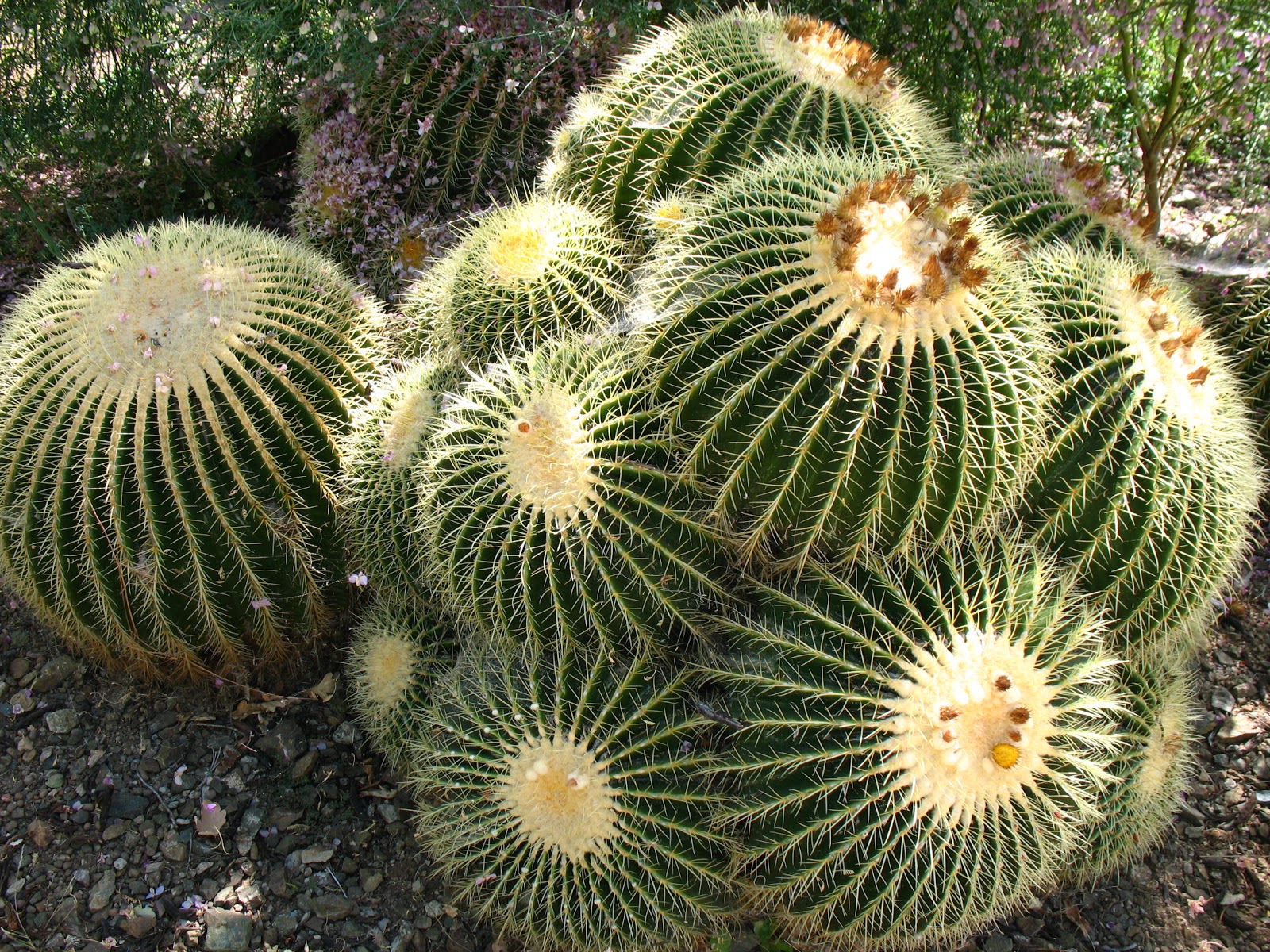


Santa Cruz, California


INTERNATIONAL GARDENS 
Leon Levy Native Plant Preserve – Bahamas
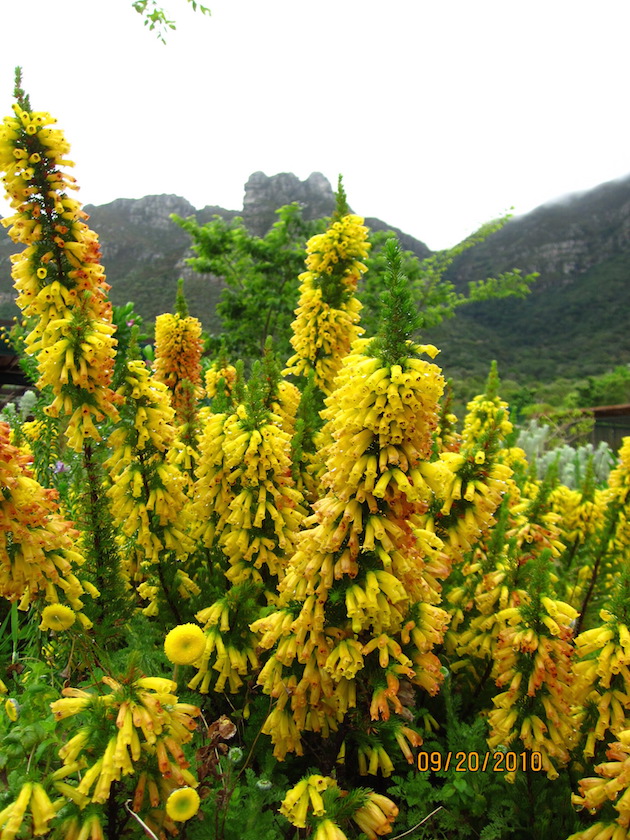
Kirstenbosch National Botanical Garden – South Africa*
Harold Porter National Botanical Garden – South Africa*
Parc Botanique et Zoologique Tsimbazaza – Madagascar
Hong Kong Zoological and Botanical Gardens
* South Africa has an amazing commitment to botany with their network of nine unique National Botanical Gardens scattered throughout the country.

Betty's Bay, South Africa


Cape Town, South Africa


WISH LIST
Missouri Botanical Garden
Royal Botanic Gardens at Kew & Edinburgh
Quarryhill Botanical Garden
Jardín Etnobotánico de Oaxaca
Marie Selby Botanical Gardens
Coastal Georgia Botanical Gardens at the Historic Bamboo Farm
The Polly Hill Arboretum - recommended by my tour guests
Harry P. Leu Gardens - recommended by my tour guests

Emily B. Magnaghi
Associate Director


Thursday, August 27, 2015

Inspiring Students to Discover Why Plants Matter

2015-2016 Teacher's Information Meeting Kick-off
We kicked off the Upper Keys Fairchild Challenge (UKFC) last Saturday with our annual Teacher’s Information Meeting. We are excited for this year’s Challenges as the themes of The Everglades for elementary school and The Voyages of Plants for middle & high school are interesting and relevant not only to the environment and ecology of South Florida and the Keys, but on a global scale, as well. A first for this year will be a teacher’s workshop and professional development points for teachers participating in a Challenge.

2014-2015 Award Ceremony
Last year we had over 1100 students and 62 teachers participate in our program, the highest number to date, and we expect to grow even more this year with additional participation. Last year also marked our first offering for high school Challenges, of which four were submitted by the winning high school. Hopefully we will have another high school jump on board this year for more competition. Competition or not, the students learn many important ecological principles while doing their Challenges. These include plant-animal interactions, plant life cycles, how to take environmental action to the community and state levels, critical thinking skills involving conservation techniques, and using art as a tool to convey environmental awareness, just to mention a few. Speaking of art, last year we provided a student art workshop for elementary school which we have expanded this year to accommodate middle and high school students.

Yummy Sugar Citrus Squares were submitted by Coral Shores High School for the Green Cuisine Challenge
Key Largo School students working hard on their school garden!


Follow the handmade mosaic stepping stones to Treasure Village Montessori School's garden

Environmental Action by Ocean Studies Charter School.
Where else can students participate in coral restoration?!
The Fairchild Challenge program is developed by Fairchild Tropical Botanical Garden and as a satellite partner we use their framework but tailor it to the needs of our schools and the environment of the Florida Keys. We are able to compete with other satellite partners from around the world with a Global Challenge where students’ submissions are entered into an online forum to be judged against each other. This year’s Global Challenge is related to environmental change and how species are adapting to climate change through a comic strip storyline.
All is all, it’s shaping up to be another great school year in the Upper Keys!

The UKFC is supported by Kona Kai Resort and donations from private individuals, organizations and corporations. If you are interested in supporting our program, please click here: www.kkbg.org


Emily B. Magnaghi
Associate Director

Friday, June 19, 2015

Summer Beauties

Summer in the subtropics can be very hot and humid for humans but for most plants acclimated to this climate, it is very comfortable. Along with longer, warmer days, we have been getting consistent rainfall, both of which have helped many of our plants put on new growth and become reproductively active. The Gardens are full of life, colors, textures and interesting structures.


One of the highlights of our collection right now is Cycas micronesica with its first flush of female strobili (cone-like structures). If you have taken my TYUP™ tour, you know all about cycads and their prehistoric past. Now we need a male plant so the pollen from the male strobili can fertilize the ovules in the female strobili and we can get seeds. Despite our lack of a male plant, we may be able to obtain pollen from Montgomery Botanical Center (MBC) in Coral Gables and fertilize the ovules by hand. MBC has a collection of stored pollen from some of their cycads and since our plant came from them, we may well find a match.
 
Cycas micronesica

A female strobilus similar to a (pine)cone

Note the small green ovules inside the 'cone' scales.

After at least one month of waiting for the flower buds to open, we have finally been rewarded with the fragrant blossoms of Jacquinia keyensis or Joewood (primrose family, Primulaceae). This is one of my favorite plants since the flowers are slightly unusual; the outer whorl of stamens are actually well-developed staminodes that resemble petals (see photo below). The fragrance from these blossoms is exquisite and smells like gardenia with a hint of ylang-ylang. The flowers are already fading but will hopefully produce copious amounts of fruit since I want to grow them from seed. Native to the Florida Keys and south Florida, it grows in habitats between the low-lying mangrove forest and the more upland hardwood hammock so it’s right at home along our bayfront.
 
Jacquinia keyensis in full bloom (close your eyes and inhale the perfume from the flowers!)

Floral anatomy of Jacquinia keyensis

We have a closely related cousin to joewood that is a new arrival to the Gardens: Clavija domingensis, otherwise known as Langue de boeuf or beef tongue plant due to the leaves’ resemblance to a long bovine tongue. This plant is native to the Dominican Republic and will eventually be a very interesting specimen once it grows up a bit. After one week of being in the ground it already flushed out a new set of leaves. Two of its Dominican associates are planted nearby, the zombie palm, Zombia antillarum and 2 new Dominican cherry palms, Pseudophoenix ekmanii, which are critically endangered in the wild.


Clavija domingensis or beef tongue plant from the Dominican Republic with its new flush of leaves.
Pseudophoenix ekmanii, Dominican cherry palms, in the wild they are over-harvested for their sap which is used to make palm wine.

Another fragrant favorite is Plumeria sp. or frangipani and all of our trees are in full bloom. Guests recently strung their own lei! You can see the photos on our Facebook timeline.


The little fledgling doves appreciate the canopy of our white Plumeria alba.

At Robert Is Here tropical fruit stand in Florida City, they sell mangrove honey and you may think, "What? I've never seen a mangrove flower." Well, here they are in all their loveliness...
Flowers of the red mangrove, Rhizophora mangle, are often overlooked but they are quite elaborate on close inspection.
Here are the flowers of the black mangrove, Avicennia germinans, which, although small, are very fragrant.

For more photos on what is blooming at the Gardens right now, see our Facebook page for photo albums.

Emily B. Magnaghi
Associate Director